Text Annotation
Home | Text Annotation
Enhancing AI Understanding with Text Annotation
Transforming Raw Text into Structured Data for Smarter AI
Text Annotation is essential for training AI to comprehend human language accurately. Our precise labeling of entities, sentiments, and intent helps improve machine learning models for chatbots, sentiment analysis, and automated translation. We ensure high-quality annotated data for enhanced AI comprehension and performance.

Entity Recognition & Categorization
Structuring Text for Better AI Learning
Text Annotation helps AI recognize names, locations, and key terms in vast datasets. By categorizing and labeling essential elements, we enhance AI's ability to understand content, improving search relevance and automated responses.
- Identifying names, locations, and key entities
- Organizing data for improved AI comprehension
- Enhancing information retrieval accuracy
Understanding Emotions & Intent in Text
Refining AI Understanding with Sentiment Analysis
By analyzing the tone and context of text, Sentiment Annotation allows AI to distinguish emotions, attitudes, and opinions. This improves chatbot responses, customer feedback analysis, and personalized content recommendations.
- Identifying positive, neutral, and negative sentiments
- Enhancing chatbot responses and user interactions
- Improving AI-driven decision-making
Labeling Words for Contextual Understanding
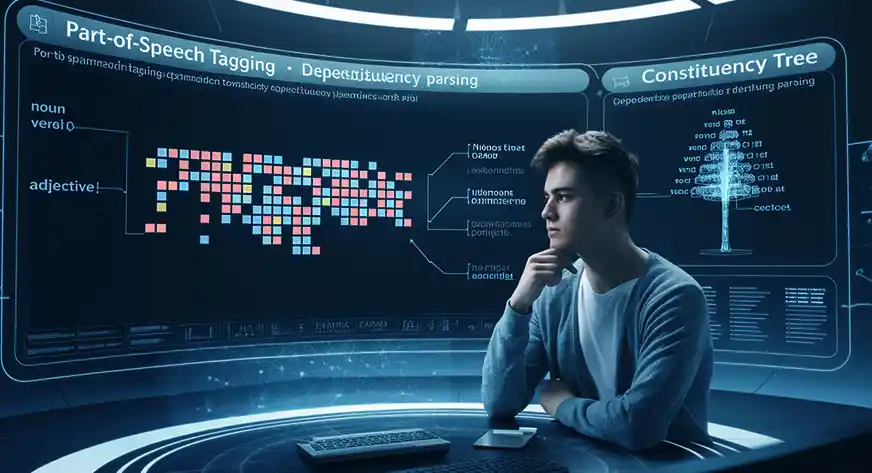
Boosting NLP Models with Part-of-Speech Tagging
Part-of-Speech (POS) Tagging enables AI to recognize the grammatical structure of a sentence, helping NLP models process and generate human-like language with better accuracy.
- Assigning nouns, verbs, and adjectives for structure
- mproving grammar comprehension in AI systems
- Enhancing accuracy in machine translation
Training AI to Understand User Queries
Improving AI Communication with Intent Annotation
Intent Annotation categorizes text based on user purpose, allowing AI to provide more accurate responses. It plays a key role in voice assistants, search engines, and customer support automation.
- Recognizing user intent for accurate responses
- Enhancing AI-driven chatbots and virtual assistants
- Optimizing search results and command recognition